Thursday, August 13, 2020

THE LAST OF US PART II - Love and Violence in Video Games

The Last of Us Part II : PS4Banners

I went back and forth many times on whether I was even qualified to write about THE LAST OF US PART II. I am not a gamer. (Correction: Since writing this I have acquired both a PS4 and the game in question.) Before the start of COVID-19, the extent of my video game experience was Wii Sports. No joke. However, when lockdown began, I suddenly found myself with a lot of time on my hands, as everyone did. So I thought, “why not?” I made a Steam account, bought both Portal games, and tried my hand at gaming. While it took me a combined 22 hours to finish Portal and Portal 2, by the end I understood what all the fuss was about. Narrative video games do something that no other type of media can. Forget breaking the 4th wall, they put the 4th wall behind you.

While I knew that the majority of video games have some kind of framing story, it was my ignorant belief that the story was secondary to whatever puzzle solving or first-person shooting the game was really about. An excuse to blow heads of zombies or enemy soldiers or enemy players. And that may be true about some games, but THE LAST OF US PART II is not one of them. Reading the critical and public reception for TLOU II, I was led to believe otherwise. Critics and gamers alike complained about the game’s excessive violence, depressing storyline, and sense of betrayal from their expectations based on TLOU II’s predecessor. Many of those complaints were valid. Ellie’s ‘roaring rampage of revenge,’ following the death of her father figure Joel, sees her killing people, ‘infected’, and the occasional attack dog, left and right.

Ellie and Dina talk about Spy Kids in new The Last of Us Part II ...

Yet after watching this game (yes, I said ‘watching;’ I, unfortunately, did not own a PS4 at time of writing) those were not the images or the impressions I was left with. To put it bluntly, this game is beautiful. Heralded as having what are perhaps the most impressive graphics to ever exist in video game history, TLOU II will show you sparkling snow crunch beneath your feet, sunlight dapple leaves and spill through windows—windows that are simultaneously reflective and transparent. And oh yeah…detached arms, disgustingly detailed zombies, and blood coming from pretty much everywhere. But that seems to be what many people have forgotten. As touching as Joel and Ellie’s relationship is, and as beautiful as the game design may be, TLOU II is at its core a horror game. Since when do horror games, or movies for that matter, need to have happy endings?

The cyclical consequences of violence are a common theme in horror content, but not one that I believe can ever be over-done. There is perhaps no theme more integral to the history of the human species than how cycles of violence are propagated over time. The same is true for TLOU II. After Joel makes the fateful decision to save Ellie from the well-intentioned Fireflies, he not only dooms the human race, but dooms himself as well. Little did he know, Abby Anderson would find her father dead in the operating room where Joel slaughtered him, and he would be hunted down until his life’s tragic end at her hand. Abby’s mission to kill Joel directly mirrors Ellie’s mission to avenge him. Anyone killed in the name of revenge has someone who loves them, and who would want revenge for themselves. However, between Ellie and Abby’s central playable campaigns in TLOU II, there is a fundamental difference: motivation.
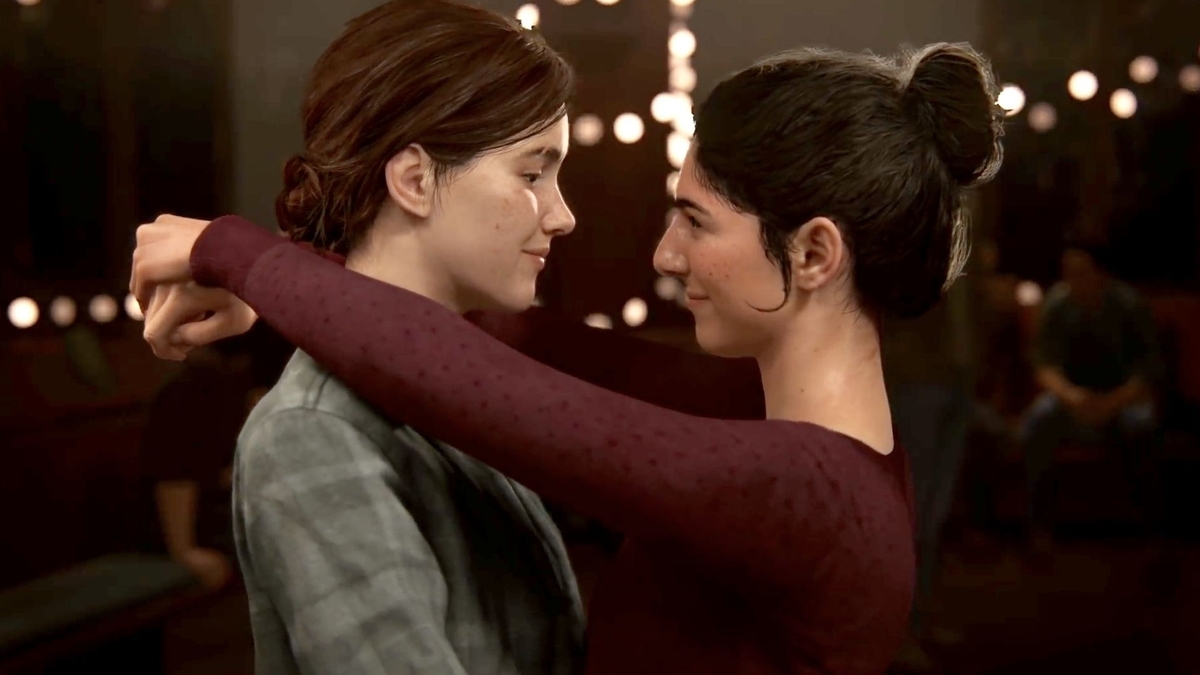
The Last of Us Part 2: Why Some Players Hate This Sequel | Den of Geek

In the game, the player experiences the same three days in Seattle, first as Ellie and then as Abby, up until the point where their two storylines converge. Now I could wax poetic for hours about how I love to see deadly women, a trope perfected in both Abby and Ellie, but that would be counterproductive to my point. What the game seeks to emphasize, in my interpretation, is the two women’s capacity for love, as well as violence. The tender moments between Ellie and Dina, Abby and Owen, and Abby and Lev (as a reflection of Joel and Ellie in the first game), demonstrate how abandoning revenge-seeking will always be the stronger choice. Ellie and Abby make different choices, and the state they each find themselves in at the game’s conclusion represents the different consequences for each choice. Abby is with Lev, and Ellie is alone.

In the brief scenes of farmland happiness between the two Abby/Ellie standoffs, we get to see a glimpse into the life Ellie could have had with Dina and their child if she had been able to break the cycle of violence within herself. Yet, she is plagued by nightmares and flashbacks to the both Joel’s death and the unspeakable acts she herself committed. It is interesting, in comparison, that Abby does not have these same flashbacks when she is shown in Santa Barbara with Lev before the Rattlers’ attack. While we know she suffered nightmares about her father’s death while in Seattle, upon saving Lev she has a final, almost pleasant dream, where she finds her father alive in the surgical suite. It is almost as if, by finding a new purpose driven by love, her revenge-fueled suffering has eased. If only the same could be said about Ellie.
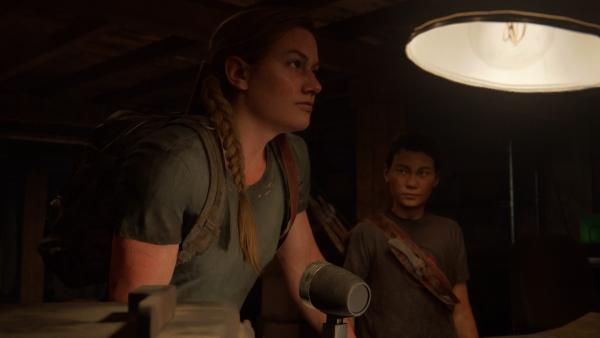
Last of Us Part 2' Ending Explained: What Does the Butterfly Moth ...

Ellie could have found the same solace in JJ that Abby found in Lev, yet she easily abandons him and Dina to pursue Abby once again. And even in that second attempt, she is unsuccessful. In a game centered around pseudo-parent/child relationships, the answer to why Ellie made the choices that she did ultimately relates to her relationship with Joel. When Joel saved Ellie’s life, it would appear that he unknowingly doomed it as well. In the cut-scene where Ellie and Joel discuss his actions from the end of the first game, she tells him she will never forgive him for taking away her only chance to make her life mean something. At the end of the day, if she cannot use her immunity to the infection to save the world, Ellie sees herself as disposable—a trait which makes her such an effective killer. Ellie believes she has nothing to lose. It is only as she sits in the water as Abby and Lev ride away, that she realizes what she has lost in the pursuit of revenge.  

The extremely divided reaction to this game both surprises me and doesn’t. Fans of the first game—which I personally have no particular attachment to—are justified in being upset that they were forced to empathize with the killer of a character they had loved for the last seven years. Yet, as an unbiased party approaching this game, I can only relay how in awe I am at the gutsy storytelling, unrivaled graphics, and apparently brilliant game-play. I truly cannot wait for the day I can afford a PS4 and play this thing myself. Art that only makes people happy, and for that matter horror that only makes people happy, is not the only valuable type of art. Sometimes, the stories we engage with are difficult, and challenge us to rethink our perception of the actions of others. It is stories like these that are the reason I love to engage with horror, film—and yes—video games.

Thursday, June 25, 2020

Redundant Remakes: CHILD'S PLAY (1988 vs. 2019)

I was always terrified to watch the original CHILD’S PLAY, or as I referred to it in my head, “Chucky.” It certainly came as a surprise to me that the film was not actually called “Chucky,” but I digress. However, a couple weeks ago I finally took the plunge, despite my slight phobia of creepy dolls and/or children in horror films, and watched CHILD’S PLAY (1988) directed by Tom Holland, creator of one of my all-time favorites--Fright Night. And boy was I pleasantly surprised. To be perfectly honest, I loved this film. Brad Dourif is delightfully manical as the (not titular) sentient doll, and somehow pulls off the incredibly implausible premise of a murderer’s soul infecting a child’s toy with glee. As his victim, and eventual final boy (is that a thing?), Andy has got to be one of the most adorable young horror stars and certainly gives The Shining’s Danny a run for his money.

Therefore, having enjoyed the 1988 version so immensely, I had a feeling that nothing particularly good would come of the 2019 reboot--and unfortunately I was right. By replacing the supernatural elements of Chucky’s creation with an evil AI, the film removed not only the main source of humor, but also the main source of horror from the film. It is not nearly as frightening to imagine a robot stalking an aged-up Andy as it is to see an adult criminal watch a child sleep in the form of a doll. CHILD’S PLAY (2019) makes a few solid attempts at social commentary, ie. having Chucky learn to kill from watching The Texas Chainsaw Massacre 2 with Andy and his friends, or depicting the potential horrors of having one’s home controlled by a corporate AI. However, these critiques fall flat in the face of the original film’s portrayal of the consequences that follow when adults refuse to believe their children.


It is simply another weak attempt to capitalize on recent horror flicks starting a ‘Scooby-Gang’-like cast of characters (see It (2017) for a successful usage), and the poor characterization of Andy’s “friends” detracts from the film’s impact instead of adding to it. The writing of female characters and characters of color also feels more like an attempt to satisfy the industry’s desire to be diverse, when the plot could have made much better use of them. In the end, the film’s climax is unnecessarily large-scale and bombastic, while the original CHILD’S PLAY made the obviously right choice of ending Chucky’s reign of terror in the house where it started.

CHILD’S PLAY (2019) attempts to placate by bastardizing the most famous line from its predecessor (“This is the end, friend!”), but ultimately does not succeed at creating nostalgia for the original film or remaking it into something interesting and new. All the 2019 entry into the Chucky franchise ended up doing for me was solidify my belief that the original is superior in practically every way. The gags, kills, jokes, and horror sequences all land with weight in CHILD’S PLAY (1988), and exemplify all the facets of classic 80s horror films that make them great. A remake should never simply be an attempt to cash in on a famous name, but should bring something new and valuable to a familiar story. CHILD’S PLAY (2019) fails where many have failed, and neither its excessive gore nor unfortunate animatronic doll can save it.

Friday, April 3, 2020

COHERENCE (2013) - Knowing Yourself


Director James Ward Byrkit’s 2013 film, COHERENCE, is a sci-fi thriller guaranteed to blow your mind and leave you unsettled for days to come. Since it is nearly impossible to write about this film without spoiling it, I recommend watching it right now. What is so incredible about this film is that its “flaws” only serve to make it more flawless of an experience. For a largely budgetless film with an almost entirely improvised script, the actors’ stellar performances combined with some handheld camera magic serve to create a film so tense that its mind-bending concept is almost overshadowed by the gut-wrenching, visceral power it holds.

COHERENCE opens as Emily Baldoni’s Em arrives at a dinner party in the wake of Miller’s comet passing closely over the earth’s atmosphere. The comet almost becomes a character of its own, an astrological boogeyman of sorts, as Em documents strange historical occurrences during comet passings’ past. Dinner conversation quickly shifts, however, as various tensions within the friend group bubble to the surface. Sardonic and passive aggressive references to past relationships, affairs, addictions, and career failings bounce between the party guests as harsh smash-cuts in the editing break up the hyper-realistic dialogue. Yet the stakes quickly rise with the inexplicable loss of all cell service, internet, and electricity, attributed to the comet’s influence.


As freaky events unfold concerning an identical house down the street, COHERENCE quickly reveals the double meaning behind the line “we can’t trust ourselves.” While the characters attempt to make sense of the physics of the “decoherence” they are experiencing, the ‘novum’ of Schrodinger's Cat-like alternate realities is almost entirely beyond the comprehension of characters and viewers alike. COHERENCE dives deeply into what it really means to ‘confront yourself,’ and how to deal with the realization that you may be your own dark alter ego. Human logic and reason can only go so far to combat the forces of physics, when parallel universes are splitting at the seams. COHERENCE effortlessly balances the both dichotomies of fate and free will, and the horrific with the scientific.

Yet most fascinating in this film, is to simply observe the characters’ interactions with each other, and their own internal struggles, even as reality breaks down around them. When one’s closest friends and partner may not actually be who they say they are, what meaning can trust and intimacy truly hold? And if given the choice to leave your own reality, and take the place of yourself in a ‘better’ one, is it worth the risk? COHERENCE forces its audience to confront these questions and more, through a SF event that takes place in a world directly resembling our own. COHERENCE not only suggests that people have little understanding of what space-time may in fact be capable of, but that we also lack understanding of what we are capable of ourselves.


Thursday, March 5, 2020

Redefining the Final Girl: Rebirth Through Violence


Horror, as a genre, is by and large comprised of films about the lives of women, for an audience made up of mostly women. As one of the few genres wherein women hold on average over 50% of screen-time, it is no surprise that 60% of horror fans are actually women. In my opinion, an integral part of why women love horror is what is possibly its best-known trope, the Final Girl. As is clear from the title of my blog, the Final Girl trope is one close to my heart. A term coined by Carol J. Clover, “Final Girl” is defined by the Merriam Webster dictionary as, “a trope in horror movies, referring to the female protagonist who remains alive at the end of the film, after the other characters have been killed, when she is usually placed in a position to confront the killer.” In its more misogynistic origins, the use of the Final Girl as a plot device sets up a face-off between a young woman and the male slasher villain, creating a hyper-gendered battle of the sexes meant to show how female purity can save a woman from male wrath. Yet, the Final Girls of late have not commonly been the ‘good girl’ of slasher films past.

In my opinion, the definition of the Final Girl is changing, as is her role within a film. Historically, the trope is defined situationally, and through character traits. The original Final Girl (think Laurie Strode and Nancy Thompson) is classically well behaved, studious, not promiscuous, and often brunette. While she faces off with the killer/monster, and perhaps kills them, she is not a violent character; she acts in self defense, not as an aggressor. Yet, the Final Girl has evolved since the 70s and 80s. And retroactively, the term is being applied to characters from the era who may not previously been considered Final Girls under the original definition. The ‘situational Final Girl’ is simply the last woman standing, the character in a slasher film who survives the longest, as a result of her idealized personality traits. However, ‘The New Final Girl,’ as I will refer to her, is defined by her character arc throughout the film, and how she comes out the other side--reborn and remade.

Sidney Prescott of SCREAM (1996), is a sort of transitionary Final Girl between old and new. SCREAM has a self-awareness of this trope, and purposefully has Sydney break it by having sex, and by experiencing catharsis for a past trauma by slaughtering the slasher-killer herself. It is this plot point that defines the New Final Girl in my eyes; she is reborn through violence. As a retroactive application of the term, CARRIE (1976) may hold the first true example of the New Final Girl. While Carrie may be an antihero, it is the image of a powerful woman--soaked in blood--exacting her revenge, that many New Final Girls have recreated (ex. THE WITCH, 2015). Her family and social traumas come to a head with the film’s iconic pig-blood prank, leading Carrie to achieve catharsis only by exploiting the full scope of her telekinetic power. While not every Final Girl has such literal superpowers, it is essential that she reach her full potential through violent action, and confront her past trauma with her own strength alone. This new definition of the Final Girl, brings us to 2005’s THE DESCENT.

THE DESCENT, starring Shauna Macdonald as Sarah Carter, employs the New Final Girl in all her new-found glory. After suffering the deaths of her daughter and husband, Sarah is brought down into an unexplored cave full of unimaginable horrors from which she emerges reborn, blood-soaked and badass (US ending). As perhaps the most iconic feminist horror film ever released, despite being directed by a man (Neil Marshall), THE DESCENT understands its female characters as complex: reckless and practical, physical and emotional, joyful and traumatized. Juno and Sarah become two sides of the same coin, both New Final Girls in their own right. Juno’s character arc runs parallel to Sarah’s, as she too lost a lover when Sarah’s husband died. However, Juno cannot be seen as the protagonist, as she undergoes no real personal change throughout the film. Sarah, on the other hand, is remade and refashioned by her experience in the caves. As Beth says to her, “the worst thing that could have happened to you has already happened and you're still here. This is just a poxy cave and here's nothing left to be afraid of, I promise.” By the end of a horror film, the Final Girl has nothing left to be afraid of, because the worst possible thing has already happened, and she survived it.

In recent years, the New Final Girl has found representation through the making of horror films with more intentionally feminist themes. In this vein, I particularly want to shine a light on 2019’s READY OR NOT. Samara Weaving’s character, literally a Final Girl named Grace, survives her murderous in-laws by triggering an ancient curse that leads to their gory deaths, and ends the film coated head to toe in their blood. While READY OR NOT has a high body count, it is not a traditional slasher, and demonstrates how the Final Girl in horror has become almost entirely uncoupled from the slasher sub-genre. Instead, the film is more concerned with Grace’s personal character development, wherein she finds new confidence and a sense of her own value. She learns never to bend to another’s will again.

What the ever-changing definition of this trope tells me most is that women’s involvement, both as fans and producers of horror content, is making an impact on the way women are represented in film. While the horror of the female experience has been central to the genre since its conception, the Final Girl’s journey through those horrors has not always been depicted with attention and care. Treating female characters as complex humans, who are not simply objects and catalysts for male characters to interact with, is what the New Final Girl archetype does best. Horror is concerned at an essential level with violence and violent acts, therefore, a film’s female protagonist must harness that violence in her ascension to Final Girl status.


Thursday, February 27, 2020

Amy Elliott Dunne: The Greatest Female Villain of All Time

When I first watched the film GONE GIRL (dir. David Fincher), I was unconvinced. Gillian Flynn’s book was so close to my heart, and no movie adaptation could possibly have satisfied me. I found Ben Affleck as Nick too sympathetic, whereas in the book I was nearly rooting for Amy’s victory. However, having just re-watched the film, I can honestly say that it is nearly perfect. Rosamund Pike’s performance as Amazing Amy chills me to my core, and as true as her infamous ‘Cool Girl’ monologue may be, the loss of her “person suit” in the third act makes her the most captivating on-screen psychopath since Hannibal Lecter.

Amy Elliott Dunne: My Favorite Monster | 25YL Film Analysis

Reminiscent of a more-controlled Glenn Close in FATAL ATTRACTION, Rosamund Pike effortlessly captures Amy Dunne’s masterful destructive power. Her flawless plan, her casual decision to take her own life in her quest for revenge, and her subsequent killing of Desi Collings, all paint a picture of a cold-blooded murderess with no capacity for remorse. Desi, however, is an interesting counterpoint to Amy. Yet his need to control and possess Amy is no match for her need for control over herself. Amy Elliott Dunne cannot be trapped; she refuses to be under circumstances that are not of her own making, which was the catalyst for her systematic destruction of her husband, Nick.

With the loss of her trust-fund, and after moving to Missouri to help care for Nick’s mother, for the first time in her life Amy was without agency. As the ‘Cool Girl’ facade Nick fell in love with began to fade, Amy realized she was losing control over him as well, with the realization of his infidelity. Using the skills she developed framing Tommy O'Hara for rape, she perfectly orchestrates Nick’s arrest and almost-conviction for her murder. Only after proving his own ability to manipulate, and deference to her authority, does Amy return to him.


In the novel I felt as if they deserved each other; they were two screwed up people and yet a match for each other. But the film creates even more of a sense of dread around Nick being trapped in a house with Amy at the film’s conclusion. I fear for his safety, and the safety of their child. A true feeling of horror washed over me seeing Nick cower in the corner of a dark room, clutching their cat close to his chest, as Amy sleeps peacefully in the next room. As far as horror in GONE GIRL goes, I would be remiss not to mention Desi’s death scene, one of the most graphic sex/murder scenes in cinematic history.

Seeing the blood pour over Amy’s face, and the exhilaration she feels watching Desi die, solidifies your assumption as a viewer that Amy is truly capable of anything. Not only does she lie, manipulate, frame, and reconstruct herself so easily, but she is a killer. While there is something empowering about Amy Elliott Dunne, despite her...problematic behavior, she honestly scares me. Almost a less sadistic, Americanized Asami from AUDITION, Amazing Amy has become a household name for a reason.

I’m sure some would argue with me over whether GONE GIRL could even qualify as a horror film, however, I would counter by saying that blurring the line between horror and thriller is what many Fincher films do best. SEVEN and ZODIAC both walk this same line. If Amy Elliott Dunne is not a straight-up horror character, then I don’t know what is. While I wish the film made me doubt Nick’s innocence as successfully as the novel, it encapsulates the spirit of Amy in all of her horrifying glory.