Saturday, December 14, 2019

Black Christmas (1974)

1974’s Black Christmas is a film that greatly surpassed my expectations. Going into it on Joe Bob Briggs’ “Red Christmas” special, I expected a classic slasher from the time period: annoying characters you kinda hope will die, a classic Final Girl situation, and an outside world oblivious to the killer’s actions. However, it is my view that Black Christmas is thoughtful, relevant, and includes a number of impressive cinematic techniques, as well as a wealth of fascinating discussion points. In a predominantly female cast, I felt that the characters in the film, aside from those used only for comic relief, had a depth to their personality and were experiencing very real issues any college student might find themselves facing.

The very first thing that caught my eye in the film, aside from the killer’s chilling POV shots, was some of the costume choices in the first party scene of the film. Margot Kidder’s character Barb is wearing a black choker that says “YES,” and Olivia Hussey’s Jess is wearing a sweater depicting giant hands that cover her chest. While I doubt that Bob Clark intended for a commentary on consent to be made by the wardrobe in his film, that is where those subtle visuals took me as a viewer. Sexual harassment, and the agency of women to make their own choices, come up several times in Black Christmas. The obscene phone calls from Billy, Jess’ pregnancy, and the house mother’s mockery of Mr. Harrison’s insistence that his daughter is not in college to drink and pick up boys, all speak to important issues of women’s freedom that were relevant in 1974 and are relevant today.

The depictions of Jess’ pregnancy and desire for an abortion are particularly striking in the film. Her boyfriend Peter’s reactions honestly make him a more terrifying villain than the actual killer. While Billy’s bloodlust and obscene phone calls are certainly disturbing, an abusive boyfriend is a much more realistic threat for a woman in college to face. Peter’s violent outburst and vague threats are frankly chilling, and make it clear to the audience that getting an abortion should be Jess’s choice, and her choice alone. Another moment in the film drives this point home is that when Jess has to explain why she is afraid of Peter to Lieutenant Fuller, he does not chastise her for wanting an abortion. Instead, he takes her seriously, makes an effort to stop the obscene phone calls, and tries his best to reach the house before it is too late as Billy begins his final killing spree.

Despite the police believing that Peter was the killer and the case is closed, overall, Fuller responds very seriously to the concerns of the women in the film. Aside from the idiotic Sargent Nash, the women in this film are listened to and believed. As disgusting as Billy’s actions and language are, this film does not feel misogynistic in the way that many early slashers do. The female characters have agency in their world, make their own choices regarding their bodies and sexuality, and the men who try to help them are allowed to live, while the ones who threaten them are not. It’s true that Billy probably kills Jess following the closing credits, in classic slasher fashion, but I will remember Black Christmas as a film that did its female characters justice, even as it picked them off one by one.

Image result for black christmas 1974 title card

Sunday, September 15, 2019

Sharp Objects (2018) & It (2017/2019)

I was about halfway through watching Sharp Objects when the idea for this essay struck me. After realizing Sophia Lillis was playing the young versions of both Camille Preaker and Beverly Marsh, I started to notice similarities in the experiences of their characters; two women traumatized in their childhoods, returning as adults to their small hometowns to face those traumas head on. I initially wanted to write about ‘place’, and the way that a horrific event can linger, or repeat itself, in the place where it happened, focusing on the similarities between Derry and Wind Gap, and the differences between different characters’ responses to the trauma they suffered in those towns. However, after finishing Sharp Objects, and after seeing the second chapter of It, I realized that Derry or Wind Gap could really be anywhere. Evil does not originate from a place, but from within people. Leaving Derry does not do Beverly Marsh any more good than leaving Wind Gap did Camille Preaker. If there is anything these films have in common, it is how they show that violence, trauma, or evil can follow a person anywhere.
Image result for young camille preaker
Lillis as Camille Preaker

Image result for beverly marsh and camille preaker
Lillis as Beverly Marsh

Before I get into it, however, there are a couple of comments I need to make about It: Chapter Two. Firstly, I didn’t particularly like the film. I felt the first It film was drastically more cohesive, and while neither movie was particularly scary, made a much better horror film. Chapter Two, unfortunately, felt more like a sci-fi action comedy with jump-scares. I specifically had serious issues with the film’s tone and how character arcs were handled/not resolved. While I have not read Stephan King’s novel, I am curious to find out how that text differs tonally from its on-screen counterpart. Secondly, and most importantly, I did not feel like this adaption updated some of its content in a way I would have expected to see in 2019. The attack on the gay couple reads differently set in 1984 as it is in the book, than it does set in 2016 in the film--especially considering how horrifically the violence of this scene was portrayed. And while I would not have asked for this scene to be cut entirely, I would have preferred for the film to have redeemed the undercurrent of homophobia in the storyline more successfully. While revealing to the audience that Richie had been in love with Eddie since childhood was an appreciated gesture, it was apparently too subtle for a surprising number of straight audiences to even pick up on. Furthermore, the depth of Richie’s internalized homophobia, as well as the fact that what Pennywise calls his “dirty little secret” is never revealed to the Loser’s Club in any explicit way, makes the film’s attempt to say “Don’t worry! We’re not homophobic!” fall more than a little flat. I could probably go on and on about this for pages, but since sexuality is not the theme in this film I actually wanted to address, I will move on.

The list of similarities between Beverly’s experience and that of Camille in Sharp Objects is pretty astounding. Both women were abused by a parent, and both dealt with that trauma in extremely self-destructive ways. Camille copes through excessive drinking and self harm, while Beverly never truly escapes her past by marrying a man who treats her almost exactly like her father did. When she returns home however, we see where her journey deviates from Camille’s. Most of the Losers have an individual scene where they conquer their demons, and in Beverly’s she finds herself locked in a bathroom stall, much like that from the first film, which fills with blood while her various childhood tormentors try to break in. While I understand how meaningful it is to have her and Ben save each other in this scene, I would have liked to see Beverly combat her past on her own. It is her personal inability to break out of the cycle of violence her father initiated that leads her to end up in an abusive relationship, and rather than simply being saved from it by a ‘good man’, Beverly needed reconcile these issues for herself outside of a romantic context involving Ben. Similarly to the ‘damsel in distress’ plotline of the first film, Beverly is stripped of much of her agency, leaving her dependent on boys who often don’t seem to view her as more than an object of their romantic whims.

To return to Sharp Objects, there is an energy much like ‘It’ that resides in Wind Gap. While it may not manifest literally in the form of a dancing clown, the influence of ‘It’ lives inside many of the residents of Camille’s hometown—a personification of the abject impulses within human beings that drive them to harm one another. For many ‘It’ is passed down like a disease from abuser to victim, forcing its vessels to reenact the trauma they experienced. However, rather than focusing on these traumatic events themselves, Sharp Objects addresses the aftereffects and repercussions of those acts on the people who suffered them, as well as the people who stood by and watched. When Camille returns to her hometown, she has a very literal demon to conquer, rather than an entity like Pennywise. Like Beverly, Camille returns home hiding the physical marks of the pain she has suffered, and it is only through acknowledging and accepting that her mother is responsible for her sister’s death, as well as her own abuse, that Camille is able to move on from her past. While most characters have varying degrees of knowledge of what happened to Camille’s sister Marian, or to Anna and Natalie, no inhabitant of Wind Gap was truly spared. While those directly involved, namely Amma and Camille, find outlets to re-enact the violence that was done to them by their own mother, Camille takes that trauma out on herself, while Amma follows in her mother’s footsteps, killing girls her age, albeit in a much more gruesome fashion that Adora’s rat poison.

While ‘It’ does not literally exist in the world of Sharp Objects, it is clear that similar questions of what makes people do bad things to one another are being asked by both films. Derry and Windgap share a lot of common threads: repeated cycles of violence, missing/dead children, and abusive, unhelpful, and incompetent adults. However, there is one particular difference that I find most fascinating, one defining characteristic that separates the perpetrators of violence in these two towns. The killers in It are men, and the killers in Sharp Objects are women. This distinction creates an interesting parallel between Henry Bowers and Amma Crellin in particular. Bowers was abused by his father, and went on to abuse, and later attempt to kill, members of the Loser’s Club, while Amma was abused by her mother, and went on to kill three of her friends. I find it extremely interesting that both cycles of violence remain within the gender of these two characters. While Bowers is ultimately killed by the Losers, Amma’s true nature is only revealed in the final seconds (as well as a mid-credits scene), as the killer that Wind Gap had been searching for throughout the entirety of the series. While it comes as a shock that Adora was not actually responsible, having Amma exposed as a killer makes the prominent theme of cycles of violence lock into place.

The greatest difference between Bowers and Amma, and Beverly and Camille, is how the two sets respond to the trauma they experienced in their childhoods. Bowers and Amma externalize the violence that was done to them, while Beverly and Camille internalize it. While many of the Losers were victims of abuse, it is as if It saw a violent potential in Bowers that could be exploited, that was not present in other characters. If you cannot resist It, you become It. The same could be said about Amma Crellin. Alternatively, Camille and Beverly were required to conquer their own internal roadblocks of self-loathing in order to free themselves from their painful pasts. If there is any message that both It and Sharp Objects are trying to get across, it is that traumas cannot go unconfronted. You can move away from where something terrible happened, and you can try to forget, but eventually, you have to go home and "kill that f**king clown." 

Wednesday, August 7, 2019

Midsommar: The Horror of Relationships *Spoilers*

Before I even saw Midsommar, the first description I heard of it was that similarly to the way Hereditary explores the horrific elements of familial relationships, Midsommar would focus on horror stemming from a romantic relationship. After actually seeing the film, I’m not sure if this description is completely accurate. The most horrific aspects of the movie, the deaths of Dani’s family at the hands of her sister aside, are in fact simply a result of the cultish practices of the Swedish commune the main characters visit. And honestly, I would describe the actual scenes of “horror” in the film as being more visually shocking and gory, than actually frightening. As interesting as some of the traditional practices may be on a philosophical level (namely the life-cycle ending cliff dive at the age of 72), close up shots of the old man’s face being bashed in, along with other should-be horror sequences, feel like cheap scares to me.

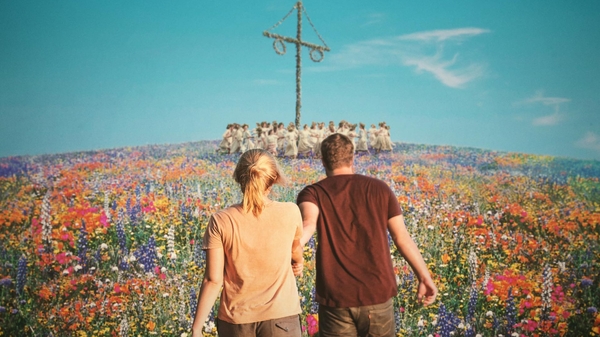
The aspects of Midsommar that interest me the most actually have little to do with it being a horror film. Firstly, it is essential to point out the absolutely gorgeous location and cinematography in this film. If nothing else, it is beautiful. Particularly captivating are the subtle visual hallucinations Dani experiences as a result of the trippy mushroom tea she is served constantly throughout the movie. I would also commend Aster on his desire to create a horror movie where all the terrifying experiences of the characters happen in broad daylight. However, the best scenes and the most interesting subject matter in this film are actually a result of the more dramatic and dialog focused aspects, rather than the horror itself.

Image result for midsommar

Specifically I would like to highlight the ways in which Dani and Christian’s toxic relationship is explored from both of their points of view, particularly in the first third of the film. He is initially presented as being extremely dismissive and unresponsive to her needs, however, we quickly realize that he feels smothered by her clinginess, and his friends encourage him numerous times to end their relationship, since it is also unhealthy for him. However, after the death of her family, he becomes trapped; she is unable to function on her own, and sees him as the only person she has left in the world. When she discovers his plans to go to Sweden without her, the single most tense scene of the film takes place.

In and all too real depiction of gaslighting and guilt-tripping, the conversation begins with Dani’s displeasure at finding out from Christian's friends at a party that he had been planning a trip to Sweden without telling her. By the end of the conversation, she is apologizing to him, seemingly confused about how the situation was twisted to place the blame on her. Simultaneously, she guilts him into promising her she can come along on the trip, leaving him the task of informing his unsupportive friends that his girlfriend will be crashing their boys’ trip. Except when she leaves the room, he promises them she won’t actually be coming, he just had to make her feel like she would. Next thing you know, they’re on the plane to Sweden, Dani included. Overall this entire exchange feels way to familiar. Dani is made to feel as if everything is her fault, and Christian feels like he can’t say no to her out of obligation. It’s a perfect recipe for resentment later down the line.

Where the movie goes from there does not feel quite as thematically rich to me as the handful of scenes surrounding their relationship before they even leave for Sweden. Whatever messages this movie is trying to convey about cult behavior, support systems, and grief become muddled in shocking imagery and the visual splendor of HÃ¥rga. While it is clear that Midsommar tries to use gore and sexuality to disturb the audience, these attempts fall flat. Overall, as many have said, Aster’s next move should really be to make a film that isn’t horror. With less focus put on scaring the audience, the complex nature of his characters’ relationships could be explored to a fuller extent. 

Monday, July 8, 2019

In Defense of Twilight

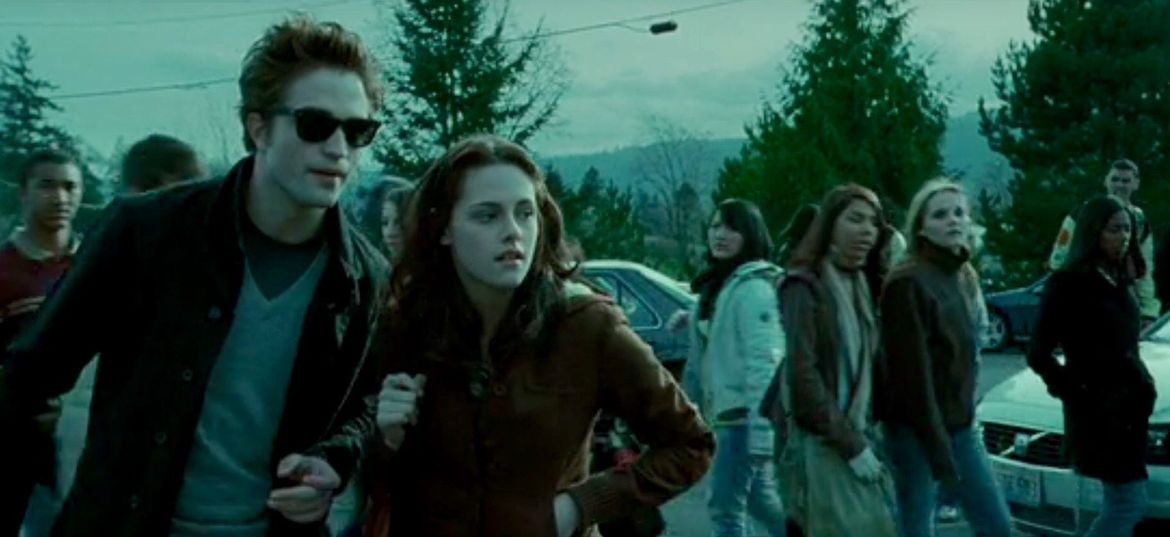
Like many of my friends growing up, I was a Twilight hater. I was a firm believer that the books and movies were equally terrible, problematic, and simply not worth my time. However, several years later, my godmother forced me to watch all five Twilight movies in three days, insisting that I was blind to the ways in which the movies were just plain fun, and actually had something interesting to say. And now I have to admit, she was right. Not only has Twilight become a guilty pleasure movie that I have seen countless times, but I have given a fair bit of thought to how I could analyze the film in a new light. So here I am, on my horror blog, writing in defense of Twilight.

The first question I asked myself was: what role, if any, does Twilight play in the genre of horror? And while Twilight itself is not strictly speaking a horror film, what horror elements does it include, and what impact has it had (for better or worse) on the horror/vampire genre as it exists today? Well, the vampire itself is inherently an element of horror. As a monster that arose in its present form from Gothic Horror literature titles such as The Vampyre, Carmilla, and Dracula, the vampire has been a staple antagonist in horror film for decades. Classically, the character of the vampire has been used to explore the thematic relationships between sex, death, and violence. The vampire as a monster is an essentially sexual one. Vampires are often used as a catalyst for authors and filmmakers to explore ‘sexual taboos’, such as homosexuality/homo-eroticism in a text like Anne Rice’s Interview with the Vampire, or female sexuality in a character like Lucy in Bram Stoker’s Dracula. To return to Twilight, I find it interesting to think about what similar themes the archetype of the vampire could be being used to explore, especially when keeping in mind the variety of sexually conservative themes brought in by Stephanie Meyer’s background. For the most part, I see these themes represented best in the character of Bella.


I’ll probably lose film critic cred for this but I must say...I mostly like Bella Swan as a character. No doubt that she has a lot of faults, but in many ways she is an extremely relatable depiction of a teenage girl with a crush. Her life-or-death relationship with Edward may seem dramatic, but honestly, most of the books’ readership was young girls whose feelings at that time probably felt very similar. However, my favorite thing about Bella in the context of sexuality, is that she is the main initiator of her physical relationship with Edward. Twilight flips the script on the classic pure heroine being seduced by the vampire. Instead, it is Bella who is trying to seduce Edward. She spends most of the books more or less sexually frustrated because her century-year-old vampire boyfriend wants to wait until marriage. I find this not only extremely entertaining, but also a pretty interesting inversion of such a standard vampire film troupe.

To return to what horror elements can be seen in the film, I see a number of common horror themes and tropes reflected in the series. And to be perfectly honest, several of the early Twilight films have actually scary moments. In the first film, the scene were the vampire James attacks Bella in her childhood dance studio is genuinely frightening. James is brutal, sadistic, and ruthless in a way very few other vampires in the Twilight universe are. The violence of the vampires is exemplified again in the new-born vampire army’s feeding frenzy in Eclipse. Additionally, the sequence where Bella is cornered by a group of men seemingly intending to sexually assault her as she walks alone at night is more than a little sickening. I chalk most of the fear factor in such seems up to Catherine Hardwicke’s stylized direction (I honestly would love to see her make a horror movie), but there is no denying that there are many elements of Twilight that carry on the legacy of vampire horror flicks past. Not to mention that the film’s set up is straight up horror. ‘Lonely girl moves to a small town with a secret family of immortal monsters’ seems like a movie that could have gone in a very different direction.

To wrap up, I’ll just say it. I love Twilight. What started out as a guilty pleasure watch has transformed into one of my favorite movies of all time. And of course, there are things to critique about these films. The unhealthy co-dependency of Edward and Bella or the anti-abortion undertones of the fourth film are perfectly valid aspects of this series to critique, and I could write another whole essay about them. However, today I wanted to write in defense of Twilight, because I see more than a couple good reasons that this series became the phenomenon that it did. It remains to this day, the highest grossing movie ever directed by a woman, and an integral part of the history of vampire cinema. So the next time you hear someone bashing Twilight, send them my way.


Wednesday, May 1, 2019

A Postmodern Deconstruction of Scream

Hello wonderful followers! I am currently in a Principles of Literary Criticism class at my university, and wanted to share one of my assignments with you! In the imaginary dialogue you’re about to read, prominent literary theorists and philosophers, Judith Butler and Jacques Derrida, will discuss the deconstuctive powers of Scream. Their conversation centers around the concept of the Final Girl, something that is clearly close to my heart. I encourage anyone who loves this movie as much as I do to check it out! Thank you!