I went back and forth many times on
whether I was even qualified to write about THE LAST OF US PART II. I am not a
gamer. (Correction: Since writing this I have acquired both a PS4 and the game in question.) Before the start of COVID-19, the extent of my video game experience was
Wii Sports. No joke. However, when lockdown began, I suddenly found myself with
a lot of time on my hands, as everyone did. So I thought, “why not?” I made a
Steam account, bought both Portal games, and tried my hand at gaming.
While it took me a combined 22 hours to finish Portal and Portal 2,
by the end I understood what all the fuss was about. Narrative video games do
something that no other type of media can. Forget breaking the 4th
wall, they put the 4th wall behind you.
While I knew that the majority of video games have
some kind of framing story, it was my ignorant belief that the story was
secondary to whatever puzzle solving or first-person shooting the game was really
about. An excuse to blow heads of zombies or enemy soldiers or enemy
players. And that may be true about some games, but THE LAST OF US PART II is
not one of them. Reading the critical and public reception for TLOU II, I was
led to believe otherwise. Critics and gamers alike complained about the game’s
excessive violence, depressing storyline, and sense of betrayal from their
expectations based on TLOU II’s predecessor. Many of those complaints were
valid. Ellie’s ‘roaring rampage of revenge,’ following the death of her father
figure Joel, sees her killing people, ‘infected’, and the occasional attack dog,
left and right.

Yet after watching this game (yes, I said ‘watching;’
I, unfortunately, did not own a PS4 at time of writing) those were not the images or the impressions
I was left with. To put it bluntly, this game is beautiful. Heralded as having
what are perhaps the most impressive graphics to ever exist in video game
history, TLOU II will show you sparkling snow crunch beneath your feet,
sunlight dapple leaves and spill through windows—windows that are
simultaneously reflective and transparent. And oh yeah…detached arms,
disgustingly detailed zombies, and blood coming from pretty much everywhere.
But that seems to be what many people have forgotten. As touching as Joel and
Ellie’s relationship is, and as beautiful as the game design may be, TLOU II is
at its core a horror game. Since when do horror games, or movies for that
matter, need to have happy endings?
The cyclical consequences of violence are a common
theme in horror content, but not one that I believe can ever be over-done.
There is perhaps no theme more integral to the history of the human species
than how cycles of violence are propagated over time. The same is true for TLOU
II. After Joel makes the fateful decision to save Ellie from the
well-intentioned Fireflies, he not only dooms the human race, but dooms himself
as well. Little did he know, Abby Anderson would find her father dead in the
operating room where Joel slaughtered him, and he would be hunted down until
his life’s tragic end at her hand. Abby’s mission to kill Joel directly mirrors
Ellie’s mission to avenge him. Anyone killed in the name of revenge has someone
who loves them, and who would want revenge for themselves. However, between
Ellie and Abby’s central playable campaigns in TLOU II, there is a fundamental difference:
motivation.
In the game, the player experiences the same three
days in Seattle, first as Ellie and then as Abby, up until the point where
their two storylines converge. Now I could wax poetic for hours about how I
love to see deadly women, a trope perfected in both Abby and Ellie, but that
would be counterproductive to my point. What the game seeks to emphasize, in my
interpretation, is the two women’s capacity for love, as well as violence. The
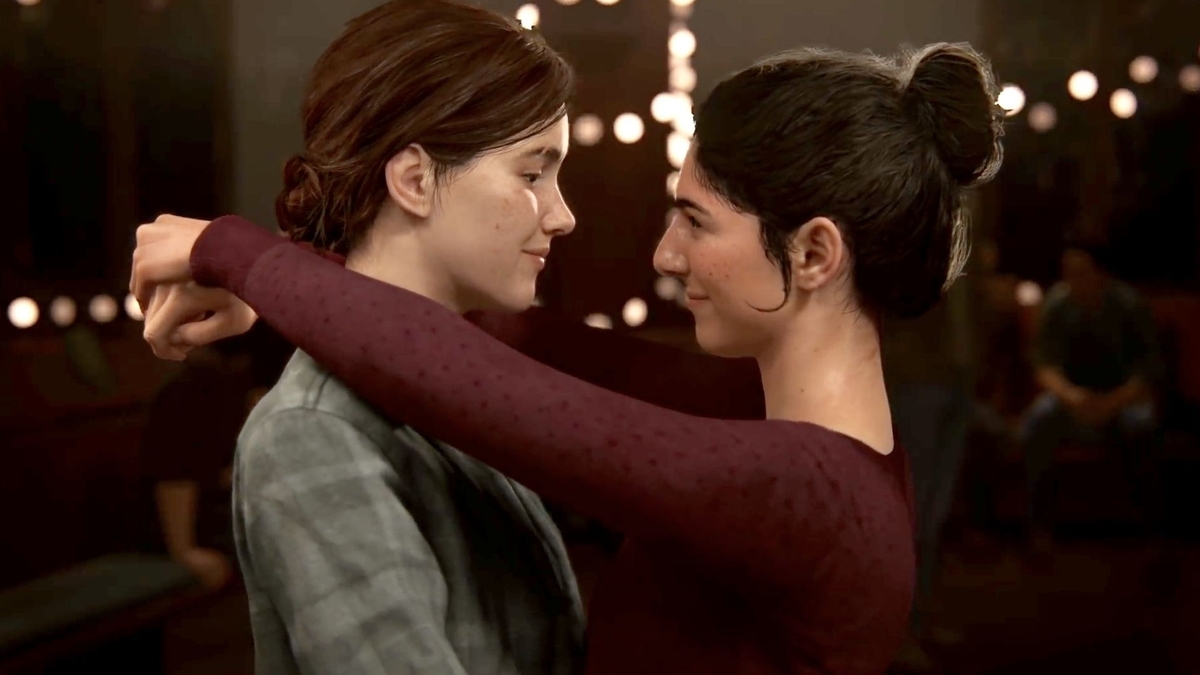
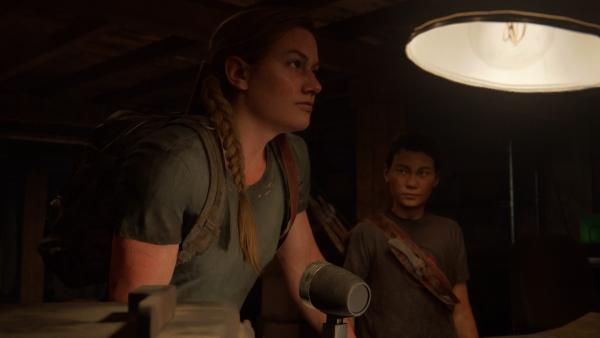
tender moments between Ellie and Dina, Abby and Owen, and Abby and Lev (as a
reflection of Joel and Ellie in the first game), demonstrate how abandoning revenge-seeking
will always be the stronger choice. Ellie and Abby make different choices, and
the state they each find themselves in at the game’s conclusion represents the different
consequences for each choice. Abby is with Lev, and Ellie is alone.
In the brief scenes of farmland happiness between the
two Abby/Ellie standoffs, we get to see a glimpse into the life Ellie could
have had with Dina and their child if she had been able to break the cycle of
violence within herself. Yet, she is plagued by nightmares and flashbacks to
the both Joel’s death and the unspeakable acts she herself committed. It is
interesting, in comparison, that Abby does not have these same flashbacks when
she is shown in Santa Barbara with Lev before the Rattlers’ attack. While we
know she suffered nightmares about her father’s death while in Seattle, upon
saving Lev she has a final, almost pleasant dream, where she finds her father
alive in the surgical suite. It is almost as if, by finding a new purpose driven
by love, her revenge-fueled suffering has eased. If only the same could be said
about Ellie.
Ellie could have found the same solace in JJ that Abby
found in Lev, yet she easily abandons him and Dina to pursue Abby once again.
And even in that second attempt, she is unsuccessful. In a game centered around
pseudo-parent/child relationships, the answer to why Ellie made the choices
that she did ultimately relates to her relationship with Joel. When Joel saved
Ellie’s life, it would appear that he unknowingly doomed it as well. In the
cut-scene where Ellie and Joel discuss his actions from the end of the first
game, she tells him she will never forgive him for taking away her only chance
to make her life mean something. At the end of the day, if she cannot use her
immunity to the infection to save the world, Ellie sees herself as disposable—a
trait which makes her such an effective killer. Ellie believes she has nothing
to lose. It is only as she sits in the water as Abby and Lev ride away, that
she realizes what she has lost in the pursuit of revenge.
The extremely divided reaction to this game both
surprises me and doesn’t. Fans of the first game—which I personally have no
particular attachment to—are justified in being upset that they were forced to
empathize with the killer of a character they had loved for the last seven years.
Yet, as an unbiased party approaching this game, I can only relay how in awe I
am at the gutsy storytelling, unrivaled graphics, and apparently brilliant game-play.
I truly cannot wait for the day I can afford a PS4 and play this thing myself.
Art that only makes people happy, and for that matter horror that only makes
people happy, is not the only valuable type of art. Sometimes, the stories we
engage with are difficult, and challenge us to rethink our perception of the
actions of others. It is stories like these that are the reason I love to
engage with horror, film—and yes—video games.